
The Milky Way is our home, but it’s not the only galaxy in the universe that hosts stunning star clusters. Beyond our cosmic neighborhood lies a vast expanse of other galaxies, each with its own star clusters that are as beautiful and intriguing as the ones we see in our own sky. Exploring these star clusters offers us a deeper understanding of stellar formation and the evolution of galaxies.
What Are Star Clusters?
Before venturing beyond the Milky Way, it’s important to understand what star clusters are. Star clusters are groups of stars that are gravitationally bound together and formed from the same molecular cloud. They vary in size, composition, and age, and there are two main types:
- Open Clusters: These clusters are young and typically contain a few hundred stars. They can be found in the spiral arms of galaxies and are often rich in gas and dust.
- Globular Clusters: Older and denser, these clusters are composed of thousands to millions of stars and are usually found in the halos of galaxies.
Both types of star clusters offer invaluable insights into stellar evolution, with open clusters providing a glimpse into the early stages of star formation and globular clusters revealing how stars evolve in dense environments.
Star Clusters in Other Galaxies
While our Milky Way is home to many famous star clusters, such as the Pleiades and Hercules Cluster, other galaxies boast spectacular clusters that are equally fascinating. These clusters not only help us understand the formation of stars and galaxies but also allow us to study the differences between galaxies themselves.
The Andromeda Galaxy
The Andromeda Galaxy, the nearest spiral galaxy to the Milky Way, is rich in star clusters. One of the most famous clusters in Andromeda is the NGC 206, a large open cluster that contains hundreds of young stars and is located within the galaxy’s disk. This cluster provides a perfect example of ongoing star formation and offers astronomers a view into the life cycle of stars in a neighboring galaxy.
Another significant star cluster in Andromeda is NGC 2249, a bright open cluster containing several thousand stars. It lies in a region of the galaxy rich in gas and dust, contributing to the ongoing process of stellar birth.
The Triangulum Galaxy
The Triangulum Galaxy (M33), a member of the Local Group alongside the Milky Way and Andromeda, also contains remarkable star clusters. The NGC 604 region in Triangulum is home to one of the largest and most active star-forming regions known. This massive cluster of stars is located in the outer regions of the galaxy and provides valuable data on the processes of star formation in a smaller spiral galaxy.
The Whirlpool Galaxy
In the Whirlpool Galaxy (M51), an interacting spiral galaxy located about 23 million light-years away, star clusters are abundant. The galaxy is in the process of merging with its smaller companion galaxy, which has led to a burst of new star formation. Many young star clusters can be observed in the spiral arms of the Whirlpool Galaxy, making it an exciting target for astronomers studying the effects of galactic interactions on stellar evolution.
Why Study Star Clusters Beyond the Milky Way?
Studying star clusters outside the Milky Way offers numerous scientific benefits. By observing these distant clusters, astronomers can:
- Understand star formation: By comparing the different types of star clusters, we gain insight into how stars form and evolve under varying conditions.
- Investigate galactic evolution: Star clusters are key to understanding how galaxies develop and change over time. The presence of star clusters in interacting galaxies, for example, helps reveal how galactic mergers influence star formation.
- Measure distances to other galaxies: Star clusters can serve as “standard candles” in determining the distance to far-off galaxies, helping us map the universe.
Observing Deep Sky Star Clusters
While the study of star clusters beyond the Milky Way offers fascinating insights, observing these distant clusters presents significant challenges. Their immense distances make them difficult to study, requiring advanced telescopes and techniques.
Using the Hubble Space Telescope
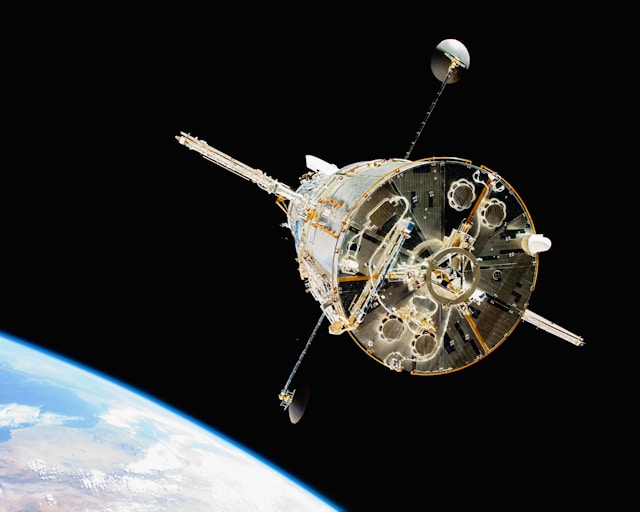
The Hubble Space Telescope has been instrumental in observing star clusters in other galaxies. Its high-resolution imaging capabilities allow astronomers to resolve individual stars in distant clusters, providing detailed data on their structure and composition.
Ground-Based Observatories
Ground-based observatories, such as the Keck Observatory in Hawaii, also play a crucial role in studying deep sky star clusters. While they can’t match the resolution of space telescopes, these observatories use advanced adaptive optics to compensate for the distortion caused by Earth’s atmosphere, allowing for clearer observations of distant objects.
Looking Ahead
The study of star clusters beyond the Milky Way continues to be an exciting frontier in astronomy. As technology advances and telescopes improve, our understanding of these distant regions of space will deepen. Whether through professional research or backyard observations, the allure of these faraway clusters will continue to captivate both astronomers and casual stargazers alike.