
A clear night sky p romises a spectacular show for stargazers, with two of the most fascinating planets in our solar system taking center stage: Jupiter and Saturn. Whether you’re a seasoned astronomer or a casual observer, the sight of Jupiter’s moons and Saturn’s iconic rings through a telescope is an experience not to be missed.
Observing Jupiter’s Moons: The Galilean Four
Jupiter is the largest planet in our solar system, and it’s not just its size that’s awe-inspiring. Jupiter’s four largest moons, Io, Europa, Ganymede, and Callisto are among the most interesting objects in the night sky. These moons, discovered by Galileo Galilei in 1610, are often referred to as the Galilean moons and can be observed with binoculars or a small telescope.
The Galilean Moons: A Cosmic Dance
These moons orbit Jupiter in regular, predictable patterns, and watching them move across the sky is a mesmerizing experience.
Io is the most volcanically active body in the solar system. It constantly reshapes its surface through intense volcanic activity, which makes it one of the most fascinating moons to study.
Europa is covered in ice, and scientists suspect that beneath its icy surface may lie a vast, salty ocean. This ocean could harbor the conditions for life, making Europa one of the most intriguing places in the solar system in terms of astrobiological potential.
Ganymede, the largest moon in the solar system, is unique among the moons of Jupiter because it has a magnetic field. This makes it distinct from most moons, which do not generate their own magnetic fields.
Finally, Callisto is heavily cratered, showing signs of an ancient surface that’s been relatively untouched by geological activity. This gives Callisto a pristine, historical quality that offers valuable insights into the early solar system.
Through a telescope, you’ll be able to spot these moons as tiny dots orbiting the gas giant, with their positions shifting each night. The movements of these moons provide an excellent opportunity to track and predict their positions.
Saturn’s Rings: A Majestic Sight
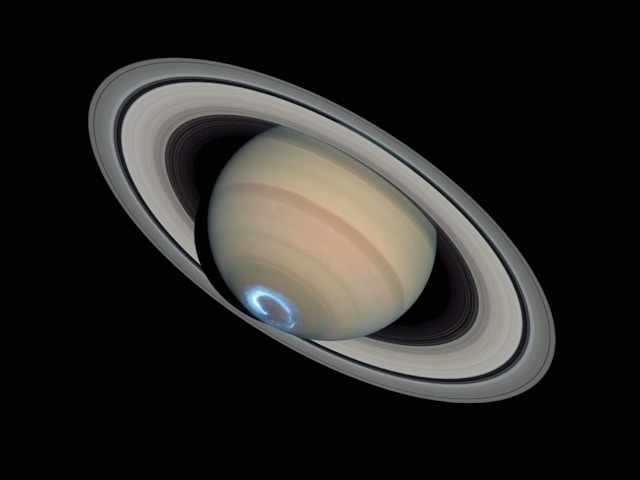
Saturn is another giant in our solar system, but unlike Jupiter, Saturn’s defining feature is its stunning ring system. Saturn’s rings are made of countless particles of ice and rock, ranging in size from tiny dust grains to massive boulders. The sight of these rings through a telescope is one of the most iconic images in astronomy.
Viewing Saturn’s Rings Through a Telescope
If you have access to a small telescope or even a good pair of binoculars, you’re in for a treat. On clear nights, Saturn’s rings are visible, and their breathtaking beauty never fails to impress. The rings appear as a wide, flat band surrounding the planet, and their texture and structure become more detailed with larger telescopes.
Saturn’s rings are not a permanent fixture, they change over time due to the planet’s tilt and its interactions with moons. For example, the rings appear much broader when viewed from Earth at certain angles, while at other times they appear more narrow or even almost edge-on, making for a different viewing depending on the time of year.
Best Time to Observe Jupiter and Saturn
To catch the best views of Jupiter’s moons and Saturn’s rings, timing is key. Here’s what to keep in mind:
- Jupiter is best observed when it’s at opposition, which occurs when Earth is directly between the Sun and Jupiter. This makes Jupiter and its moons particularly bright and easy to spot. This year, Jupiter’s opposition will occur in late October, but even outside of opposition, it remains a prominent feature in the night sky.
- Saturn is also a treat to observe, but its best viewing times occur during its opposition, which happens in mid-August. However, Saturn remains visible in the night sky for much of the year, and its rings are still a stunning sight when viewed with a telescope.
Tips for Viewing Jupiter and Saturn
- Choose a dark location away from city lights for the best visibility.
- Use a tripod for binoculars to reduce shaking and improve the stability of your view.
- Check the weather: A clear sky with minimal atmospheric turbulence will offer the sharpest view.
- Look at the right time: Evening hours after sunset are the best for observing these planets when they are high in the sky.
Why These Planets Matter
Both Jupiter and Saturn are gas giants, which means they are composed mostly of hydrogen and helium, unlike the rocky planets like Earth. Studying these planets and their moons offers astronomers a glimpse into the conditions of the early solar system.
The study of Jupiter’s moons, especially Europa, could provide clues about the potential for life beyond Earth. While Saturn’s rings offer insight into the processes of planetary formation and the ways that moons and rings interact with their host planet.
Both planets, with their unique features and extensive satellite systems, are windows into the larger processes that shape our universe.