
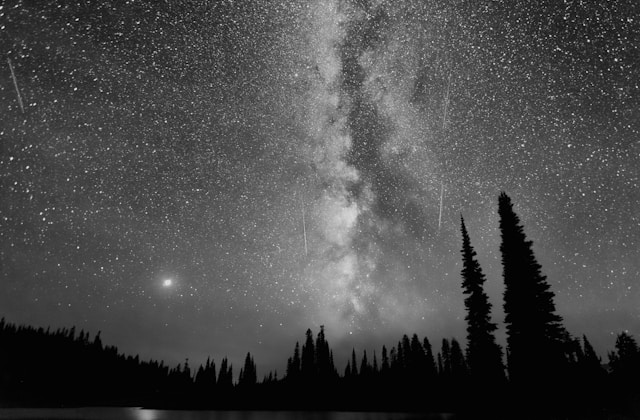
September is a rewarding month for skywatchers. As the summer warmth lingers in the Northern Hemisphere, the nights gradually lengthen, providing darker skies for observing comets, meteors, planets, and even deep sky objects. This guide highlights the main celestial events throughout September, offering a roadmap for anyone eager to connect with the night sky.
Meteor Showers Worth Watching
September marks the tail end of the Perseids, but several lesser-known showers peak this month. While they may not rival August’s brilliance, they still add sparkle to the night sky for attentive observers.
The Aurigids
The Aurigid meteor shower peaks around September 1. Although it is typically modest with around 5–10 meteors per hour under ideal conditions, it can occasionally surprise with bursts of activity. The meteors appear to radiate from the constellation Auriga, visible in the northeastern sky during the early morning hours.
The September Epsilon Perseids
Peaking around September 9–10, this shower originates from the Perseus constellation. Unlike the brighter August Perseids, the September stream is less intense but known for producing swift meteors with occasional fireballs. Observing just before dawn offers the best chance to spot them.
The Southern Taurids (Early Activity)
While the Taurids are better known for their October–November display, their early activity begins in late September. Even though rates are low during this stage, they serve as a prelude to the brighter shows of autumn.
Best tip for meteor watching: Find a location far from city lights, allow your eyes to adjust to the dark for at least 20 minutes, and look generally upward rather than focusing on one part of the sky.
Planetary Highlights in September
This month is excellent for tracking the major planets, as several reach favorable positions for observation.
Jupiter Shines Bright
Jupiter dominates the night sky, rising earlier each evening. By mid-September, it is visible by 9–10 PM local time, glowing brightly in the constellation Aries. Through binoculars or a small telescope, its four Galilean moons, Io, Europa, Ganymede, and Callisto, line up in shifting patterns that change nightly.
Saturn’s Rings on Display
Saturn reached opposition in late August, meaning it remains well-positioned throughout September. The planet glows golden in Aquarius and is visible for most of the night. Even a modest telescope reveals its famous rings, which are currently tilted in such a way that they appear thinner than in past years, but still stunning.
Venus as Morning Star
Venus makes its reappearance in the pre-dawn sky as the brilliant “Morning Star.” Best seen toward the east before sunrise, it outshines every other celestial object except the Moon. Its brightness and steady glow make it a perfect target for beginners.
Special Lunar Events
The Moon always adds drama to the night sky, and September brings some striking lunar moments.
The Harvest Moon
This year’s Harvest Moon, the full moon closest to the autumn equinox, falls on September 17. Rising shortly after sunset, it will appear especially large and orange-hued near the horizon, a classic autumn sight. Traditionally, the Harvest Moon provided farmers with extra light to work the fields, but for today’s observers, it provides a beautiful backdrop for photography.
Crescent Moons and Planet Pairings
Early in the month, the waning crescent Moon will appear near Venus before dawn, creating a striking conjunction. Later, the waxing crescent Moon passes close to Saturn and Jupiter, offering great opportunities for casual stargazing and astrophotography.
Tips for Observing the September Sky
For those eager to make the most of September’s celestial events, a little preparation goes a long way. The following checklist ensures a rewarding skywatching session:
- Check local weather forecasts to avoid cloudy nights.
- Bring binoculars or a small telescope for planets and lunar details.
- Use a stargazing app or star chart to locate constellations and radiant points.
- Dress warmly since temperatures can drop significantly at night.
- Avoid phone screens or use a red-light filter to protect night vision.
Looking Ahead
September bridges the vibrant skies of summer with the crisp clarity of autumn. Meteor showers, planetary alignments, and the Harvest Moon all provide excellent reasons to step outside and look up. Whether observing with the naked eye, binoculars, or a telescope, the month offers something for everyone, from casual skywatchers to dedicated amateur astronomers.
As the nights continue to lengthen, October will bring even more highlights, including the peak of the Draconid meteor shower and another full Moon spectacle. For now, September’s skies invite us to pause, look up, and marvel at the wonders overhead.